Showing posts with label recipe. Show all posts

Sunday, 29 April 2018

Carri baba figue

Severe Tropical Storm Fakir barrelling past Reunion recently meant that we found ourselves with three stalks of bananas blown over. The bananas were inedible as they weren't ripe enough, but we were able to recover three banana flowers, known locally as baba figue, to make a popular local dish: carri baba figue (carri is the general name for Réunion's 'national' dish, normally consisting of meat or fish cooked with onions, garlic, turmeric (safran), thyme, salt, pepper and sometimes tomatoes. Normally served with white rice, rougail, lentils and traditionally leafy green brèdes).

three baba figues 

The first step was to peel the purple outer layers off the baba figues, leaving the central white core.

peeled baba figues

close-up of one of the peeled baba figues

They can they be chopped up and put in a bowl of water with salt for 24 hours. This helps get rid of their bitter taste.

chopped up baba figues in a bowl of water with salt

The next day after draining the chopped baba figue, slice up about 300 grams of boucané (smoked pork meat) and 300 grams of smoked sausages and let it fry in the bottom of the pan with a little olive oil for 10 minutes.

boucané in the process of being chopped

chopped sausages and boucané in the pan

You will also need to dice 3 tomatoes and one large onion.

dicing the tomatoes 

This should be added to the meat in the pan along with a teaspoonful of turmeric and two pinches of salt.

adding turmeric to the other ingredients 

Cover and cook for 10 minutes, before adding the baba figue and 50 cl of water; leave to cook for 20 minutes over medium heat.

cover and leave to cook

Stir half way through cooking.

stir half way through cooking

Serve hot with white rice, rougail, lentils and brèdes (leafy greens). Bon appétit!


Finished carri baba figue!

Saturday, 11 October 2014

Rougail saucisses recipe


Rougail saucisses is one of my favourite Creole meals. Saucisse is French for ‘sausage’ and rougail normally refers to the hot salsa condiment that accompanies all dishes in Reunion – here it’s used for the name of a main dish because Rougail Saucisses is traditionally quite spicy.

Ingredients for 4 people:
  • 750g of sausages (normal or smoked)
  • 5 onions
  • 4 cloves of garlic
  • 8 tomatoes
  • 4 or 5 chillies (optional)
  • 1 piece of ginger
  • 2 tablespoons of oil

Rougail saucisses cooking over an open fire at Le Maïdo

  1. Boil sausages in a large pan of water for 15 minutes then chop into pieces.
  2. Dice onions and tomatoes.
  3. Crush and blend together salt, garlic, ginger and chillies to make a paste (use a pestle and mortar if you have one).
  4. Fry the sausage pieces for 5 minutes in a pan, then put them to one side.
  5. In the same pan, add the oil and brown the onions for one minute, then add the garlic and ginger, stir for two minutes, followed by the tomatoes and salt; mix everything together.
  6. Finally, add the sausage pieces and stir.
  7. Add a little water if necessary, then leave to simmer for 20 minutes.
Normally eaten with rice and lentils or haricot beans.

There you have it – a tasty and easy Creole meal from Reunion!


This post was originally published on the Welcome to Reunion Island blog.


Monday, 1 November 2004

Ile Sainte Marie, Madagascar

Ile Sainte Marie is a small island about 60 km long and 7 or 8 km wide off the north east coast of Madagascar


In the Malagasy language the island is known as Nosy Boraha ("nosy" means "island").

Map of island
(black line = surfaced road)

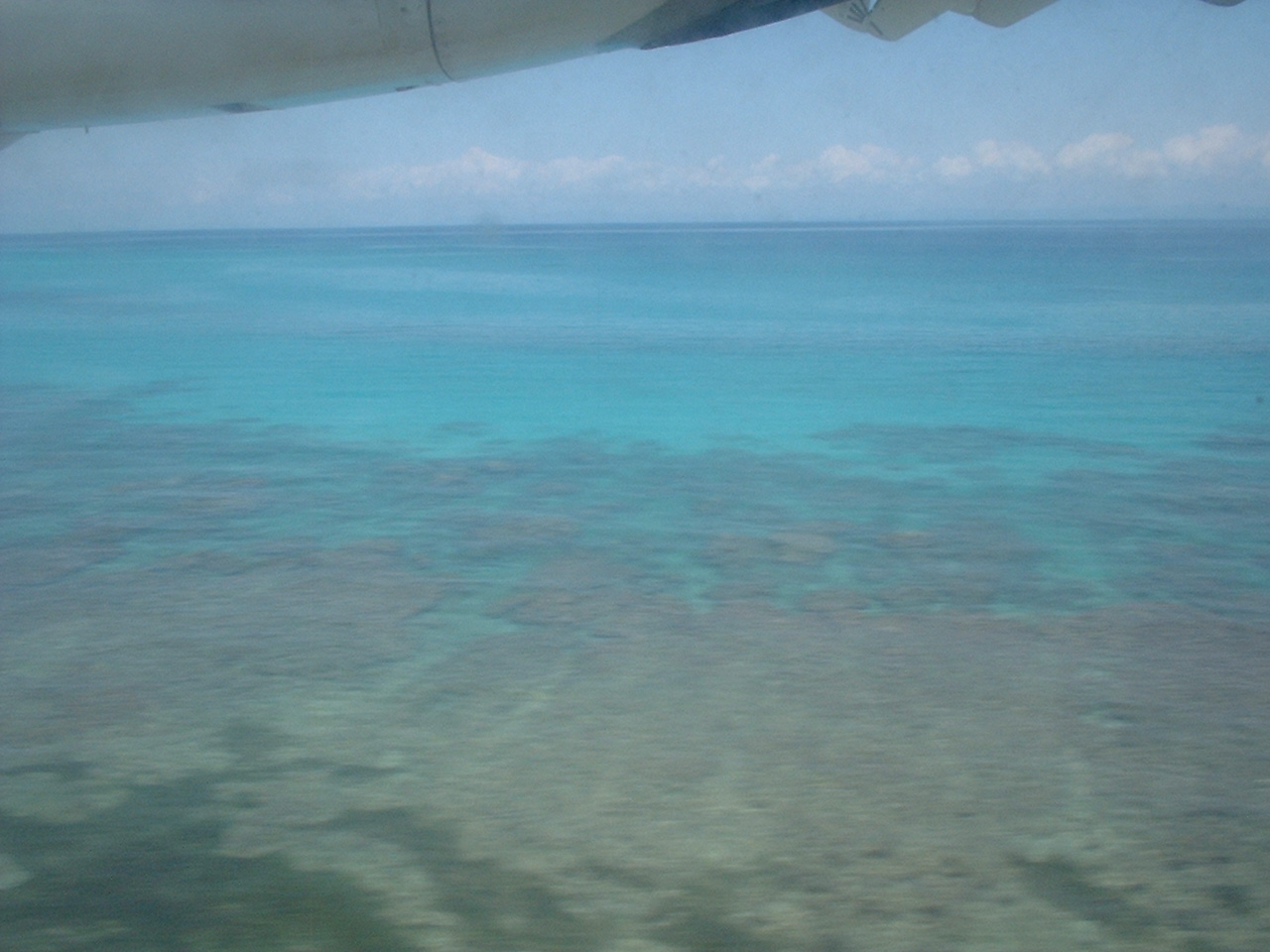
We flew to Toamasina (Tamatave) from Reunion Island, stayed there overnight, then took a short one-hour domestic flight to Ile Sainte Marie. 

coming in to land

The airport is in the island's south, and our hotel, the Princess Bora, was quite close to the airport. Transfer to the hotel was on a zebu cart!

our airport>hotel transfer

room veranda


The island is quite well-known for humpback whale watching between June and September, however as we were there in October it was too late to see any. It's possible to scuba-dive all year round however.


There are only about 10 km of surfaced road on the whole island, so the best way of getting around is by bike (short distances), motorbike, or 4x4 for longer distances.

roadside view

One of the attractions of the island is an even smaller island to the south called Ile aux Nattes.

going to Ile aux nattes

A short boat hop across, it is an idyllic island with lush vegetation, no cars and basic accommodation and eating places. 

Ile aux Nattes vegetation

Ile aux Nattes

lighthouse, Ile aux Nattes (Madagascar's first)

view, Ile aux Nattes

dragonfly

We also saw some paracress growing there, which is a plant used in  Madagascar's national dish, romazava. Paracress is quite unusual as it has the particularly of numbing your mouth when you eat it.

Romazava


We also saw some lemurs, an animal Madagascar is famous and unique for.

Lemur on Ile aux Nattes

Lemur on Ile Ste Marie


Ile Ste Marie used to be a famous site for pirates in the 17th  and 18th century, and apparently some of them are buried in a local cemetery.


Pirate cemetery


local children

All too soon it was time to leave and head back to  Reunion, but we would love to go back to Ile Ste Marie one day.


Acknowledgements:
The first two images (the maps) of this article come from http://bougetonile.com.

Useful links about Ile Ste Marie: