Tuesday, 1 May 2018

Hellbourg to Belouve hike


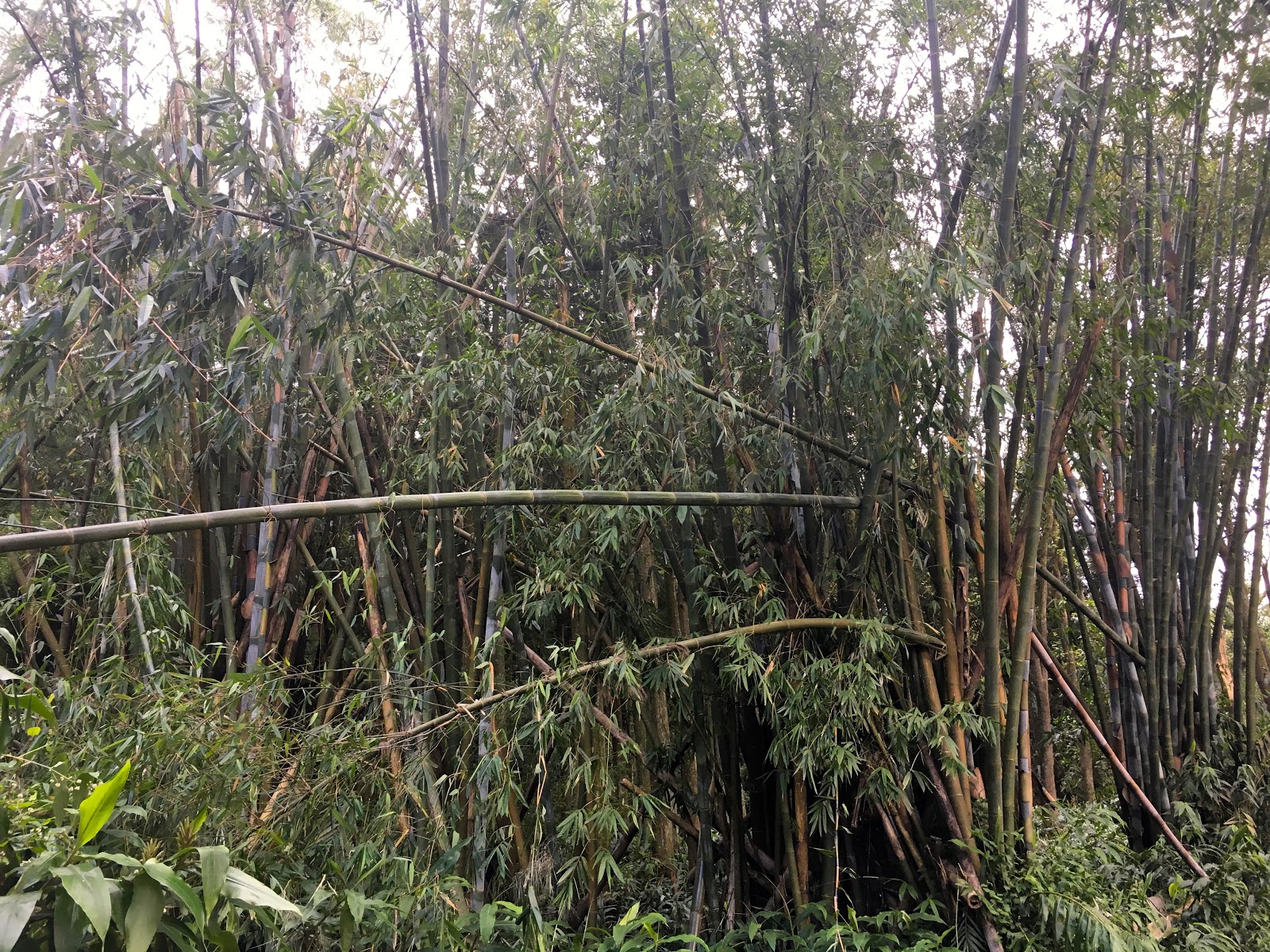
bamboo growing near the start of the hike

The hike from Hell-Bourg to Belouve is 3.5 km long, and climbs about 530 metres. The ONF sign (see below) says 1¾ hours are needed, but it only took us an hour and twenty minutes.

sign at the beginning of the hike, start of the path to right.


the hike up to Belouve is only one of several hikes
possible from the same starting point

Although Severe Tropical Storm Fakir had barrelled past Reunion only a few days previously, the path and surroundings were in a surprisingly good state. 

shrine beside the path

view from the path across the cirque of Salazie;
flat-topped Piton Enchaing to the left

fuchsia growing wild

Hydrangeas growing alongside the path

view across Salazie higher up the path, higher up;
this time Piton Enchaing is to the right

Towards the end of the path you suddenly come across two concrete pillars sticking out at a 45° angle. These are remnants of a now-defunct cableway that was inaugurated on 24th November 1954 and which linked Belouve and Hell-Bourg. It had a span of 1 202 metres, a gradient of 805 metres, and used a 1500-mètre long cable. 

concrete pillars near end of path

Then the path turns a corner and you come across more vestiges, together with another small shrine.

more relics of the cableway

path between the cableway and gîte

Once we arrived at the top we had a picnic lunch before heading back down the same way we came. Incidentally it's said the name of Belouve comes from the Malagasy word Belova which means "important or rich heritage" in English.

It took us 1 hour 20 to hike back down


You might also like:
view of nearby waterfalls when driving home

Sunday, 29 April 2018

Carri baba figue

Severe Tropical Storm Fakir barrelling past Reunion recently meant that we found ourselves with three stalks of bananas blown over. The bananas were inedible as they weren't ripe enough, but we were able to recover three banana flowers, known locally as baba figue, to make a popular local dish: carri baba figue (carri is the general name for Réunion's 'national' dish, normally consisting of meat or fish cooked with onions, garlic, turmeric (safran), thyme, salt, pepper and sometimes tomatoes. Normally served with white rice, rougail, lentils and traditionally leafy green brèdes).

three baba figues 

The first step was to peel the purple outer layers off the baba figues, leaving the central white core.

peeled baba figues

close-up of one of the peeled baba figues

They can they be chopped up and put in a bowl of water with salt for 24 hours. This helps get rid of their bitter taste.

chopped up baba figues in a bowl of water with salt

The next day after draining the chopped baba figue, slice up about 300 grams of boucané (smoked pork meat) and 300 grams of smoked sausages and let it fry in the bottom of the pan with a little olive oil for 10 minutes.

boucané in the process of being chopped

chopped sausages and boucané in the pan

You will also need to dice 3 tomatoes and one large onion.

dicing the tomatoes 

This should be added to the meat in the pan along with a teaspoonful of turmeric and two pinches of salt.

adding turmeric to the other ingredients 

Cover and cook for 10 minutes, before adding the baba figue and 50 cl of water; leave to cook for 20 minutes over medium heat.

cover and leave to cook

Stir half way through cooking.

stir half way through cooking

Serve hot with white rice, rougail, lentils and brèdes (leafy greens). Bon appétit!


Finished carri baba figue!

Sunday, 22 April 2018

Ilet Bethléem

During the 18th century Reunion was subject to visits from pirates, and some of the islanders living on the coast preferred heading inland to avoid being the target of such attacks. One of the places they went to live is a now-deserted hamlet in the district of Saint-Benoit that later came to be called Ilet Bethléem.

The îlet can easily be visited by anyone at any time, but we recently had the opportunity to join a guided visit organised by Les Aventuriers de l'Est during which we would learn all about the history, fauna, and flora to be found there. We met our guide Geoffroy at the nearby car park, which is home to a large number of weaverbirds who make their nests in the surrounding bamboo.

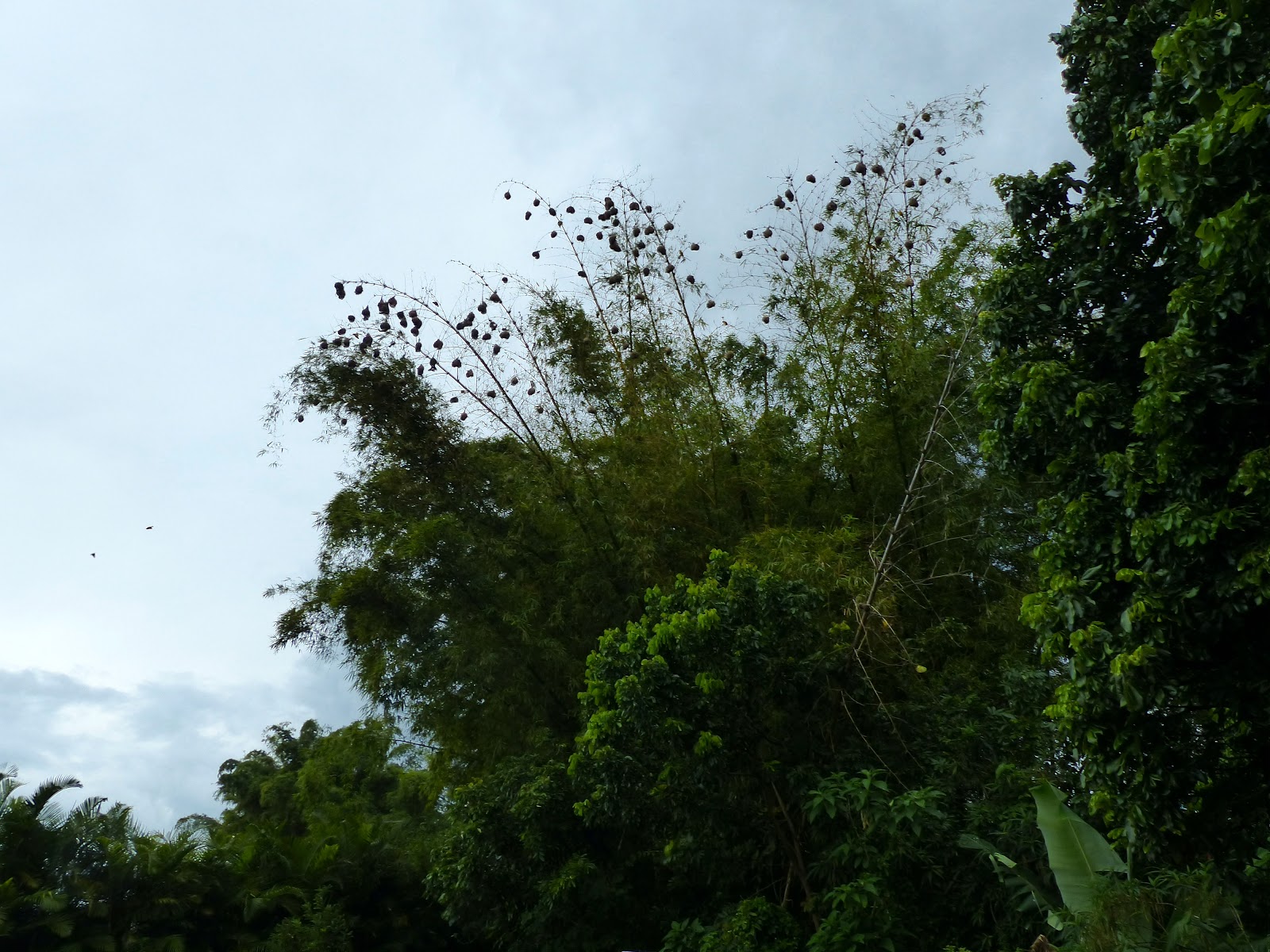
Weaver bird nests on bamboo stalks

close-up of a male weaverbird and nests

male weaverbird

The walk to the abandoned îlet takes about 20 minutes down a wide sloping path.

crucifix beside the path

sign in Creole beside the path, asking visitors to keep the site clean!

vegetation overhanging the path

shrine beside the path

a Phallus indusiatus, commonly called the bamboo fungus, bamboo
pith, long net stinkhorn, crinoline stinkhorn or veiled lady

Saint-Expedit shrine

a star laid out in stones beside the path,
in reference to the star of Bethlehem.

The îlet is beside the Marsouins river, which must have been a good source of fresh water for the villagers, who subsisted by hunting and fishing.

Riviere des Marsouins, with bamboo on the opposite bank

In 1855 the wife of Governor Hubert de Lisle became concerned about the poverty of the îlet's 500 or so inhabitants, and built a chapel - dedicated to Our Lady of Fatima - and workshops there. It was she who gave the hamlet the name of Bethléem. The chapel still stands today and continues to be used.

chapel interior

Four nuns came to instil Christian principles in the girls living there, and to teach them sewing, cooking, and gardening. The hamlet became a parish in 1860, and by 1873 the villagers were healthier and 60 pupils (of which 40 boarders) were attending school. However the nuns ended their charitable activities there in 1935.

chapel exterior

In more recent years a gîte was built, but apparently it never actually opened and so the buildings have fallen into disrepair.

one of the former gîte buildings 


looking through the corrugated iron roof of one of the gîte buildings 


The îlet remains a popular picnic spot.


See also:

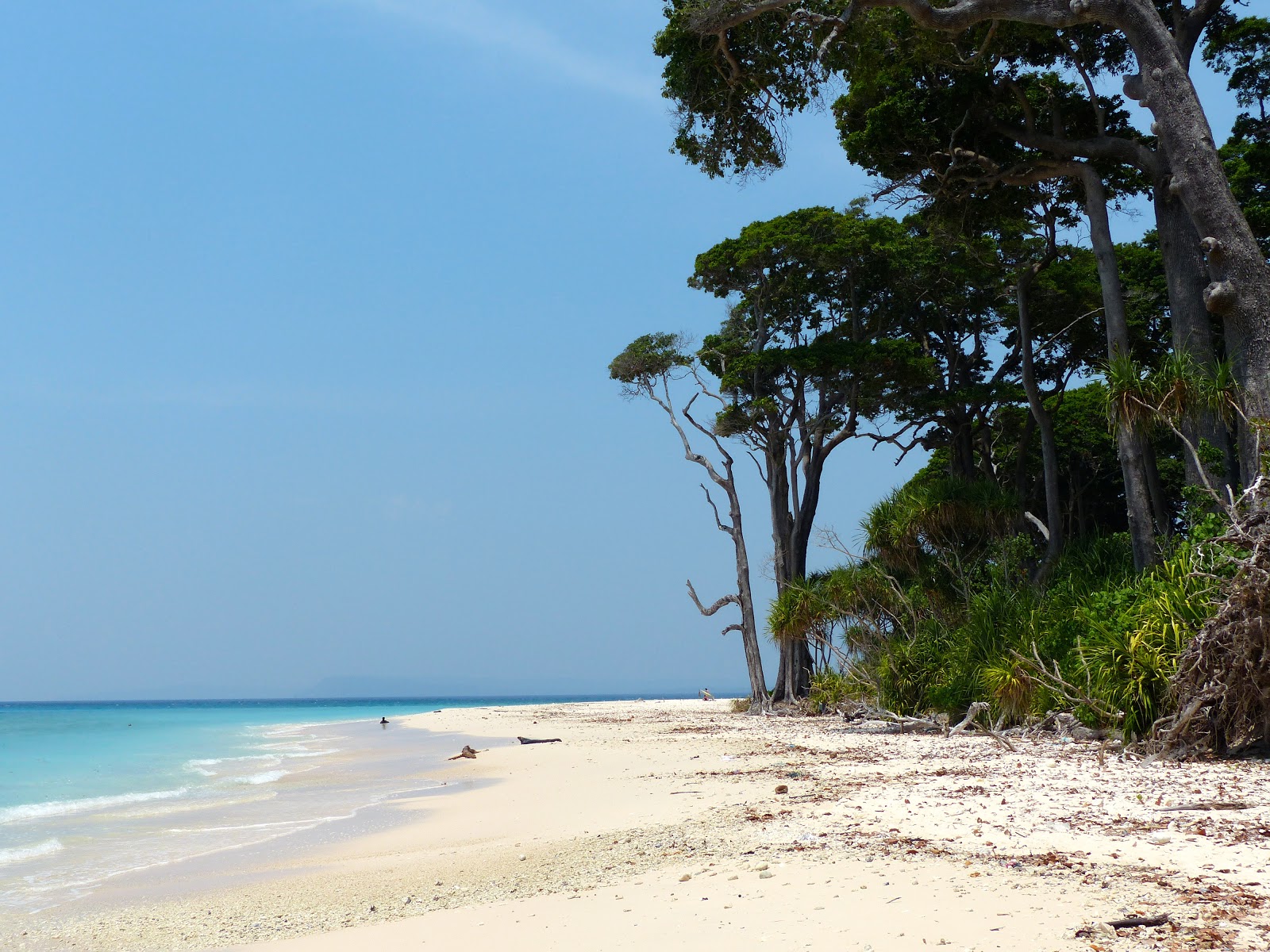
Saturday, 31 March 2018

Andaman Islands

After spending a week in southern India we flew 1,000 km east from Chennai to the Andaman Islands. This archipelago in the Bay of Bengal is actually closer to Thailand and Burma/Myanmar than India, but nevertheless belongs to the latter. There are roughly 300 islands but indigenous Andaman Islanders inhabit some of the more remote ones, and so many are off limits to visitors. After arriving at Port Blair (the islands' capital) we then took a two-hour ferry ride north-east to Havelock Island, where we spent the first four nights. Our main interest was diving, so we dived in the mornings and explored or relaxed in the afternoon.

off Radhanagar Beach, Havelock

Located on the north-west of Havelock, Radhanagar is an attractive beach and a good place to swim and watch the sunset, but at dusk everyone has to get out of the sea because of the risk of a saltwater crocodile attack at that time of day!

at Havelock

at Havelock

at Havelock

We walked through forest to Elephant Beach, which used to be famous for Rajan, its swimming elephant. (Rajan died in 2016, aged sixty-six).

Rajan, the swimming elephant (source)

trekking through the forest to Elephant Beach, Havelock

lizard in the forest on the way to Elephant Beach

We then took another, shorter, ferry ride to neighbouring Neil Island, which is smaller than Havelock. We were also able to fit in some diving there, despite having been told it wouldn't be possible on the island.

Beach at Neil Island

Neil Island

Neil Island's beaches are numbered one to five, and the Natural Arch in the photos below, at Beach 2, is only accessible at low tide.

Natural Arch, Neil Island

Natural Arch, Neil Island

sunset, Neil Island

After one night on Neil Island we then headed back to Port Blair, for our final night and some visiting. It's not a particularly attractive town, but there are a few things to see and visit. We started with the Cellular Jail, a former British prison that is now a shrine to the political dissidents it once gaoled. It was built 1896-1906 and used to have seven wings, containing 698 cells, which radiated from a central tower (some wings were later destroyed by the Japanese during WWII).

at Cellular Jail

Next we visited Chatham Saw Mill, set up by the British in 1836 and still operational. It provides an interesting insight into the island's history and economy, but would give any western Health & Safety authorities a heart attack. Visitors are free to wander everywhere, inches away from saws cutting through timber, no closed shoes or hardhats are required, workers are both barefoot and gloveless, and there are plenty of female workers and visitors in saris with long plaits of hair and flowing scarves!

shrine in the middle of Chatham Saw Mill

this Chatham Saw Mill worker was very unrepresentative of
most of the other workers as he had a hardhat and footwear!

Chatham Saw Mill

Chatham Saw Mill

temple in Port Blair dedicated to Hanuman, the monkey god

Then it was time to return to Chennai, where we arrived late at night and set off early next morning to fly back to Reunion.


See also:


  • Southern India
  • Andaman Islands diving
  • Mumbai
  • Rajasthan - India's incredible state?
  • Delhi & Agra
  • Khajuraho & Varanasi